

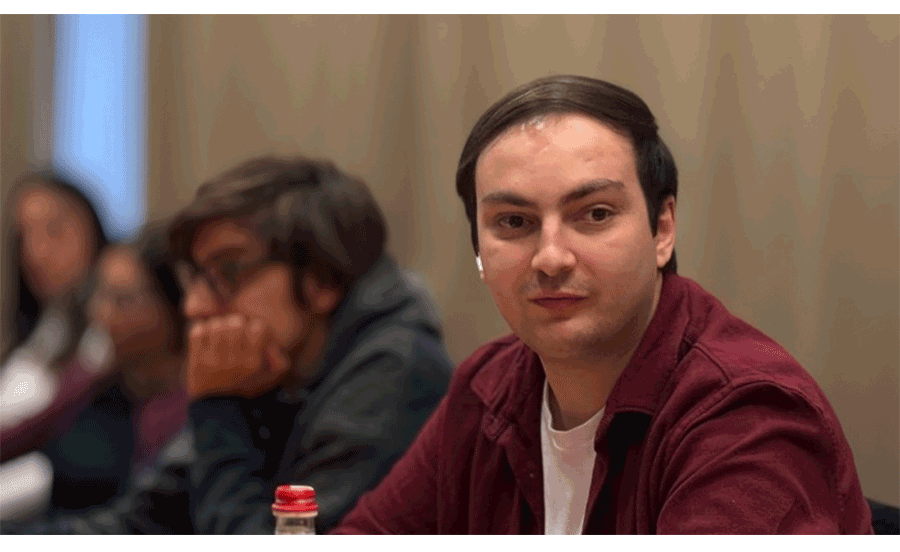
Being a representative of civil society in Georgia means fighting every day against labeling and restrictions. For RICDOG (Dialogue of Generations), a public organization operating in Kutaisi, Georgia, this struggle has a 12-year history, while for Irakli Tevzadze, it began in childhood.
"I was only 7 years old when the organization was created. I started as a volunteer and realized how important civil society is in our lives. It has already become a way of life for me," says Irakli.
Last April, the Georgian Parliament passed a series of laws restricting media and civil society organizations, which experts say are aimed at pressuring civil society and independent voices in Georgia. This includes the “Foreign Agents Registration Act,” targeting independent civil society organizations and media outlets.
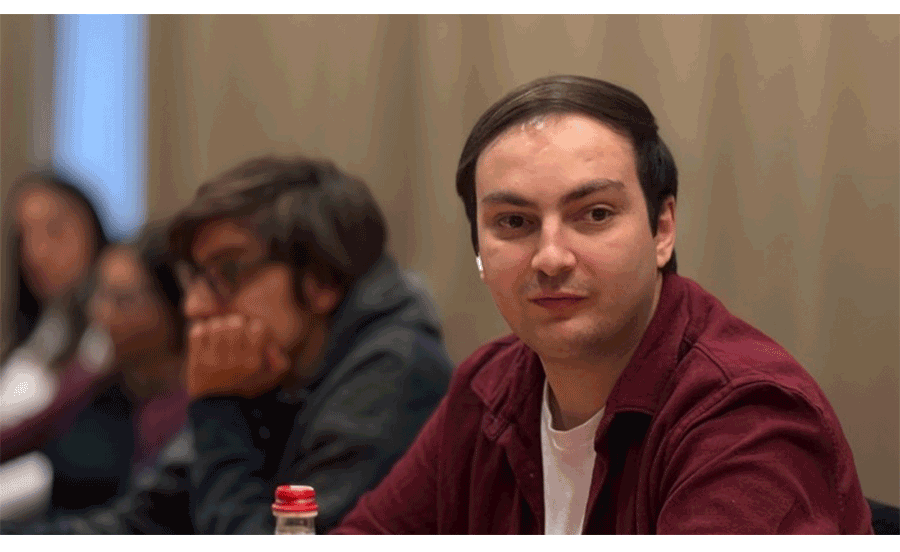
Within the complex legislative and political labyrinth for civil society in Georgia, RICDOG, in close cooperation with the Czech organization NESEHNUTÍ, carries out a mission of vital importance. The program “United for Democracy: Advocating for the Future of Civil Society in Georgia” has become a foundation that helps local organizations not only survive but also speak out about their rights.
"The initiative aims to protect Georgia’s civil sector under the pressure of new restrictive state regulations. The most impactful component of the program became the nationwide campaign ‘Forward, Georgia, Forward.’’ This was not just an informational platform, but a powerful media tool reminding the public that civil society organizations (CSOs) are the pillars supporting the country’s social development and democratic future," he says.
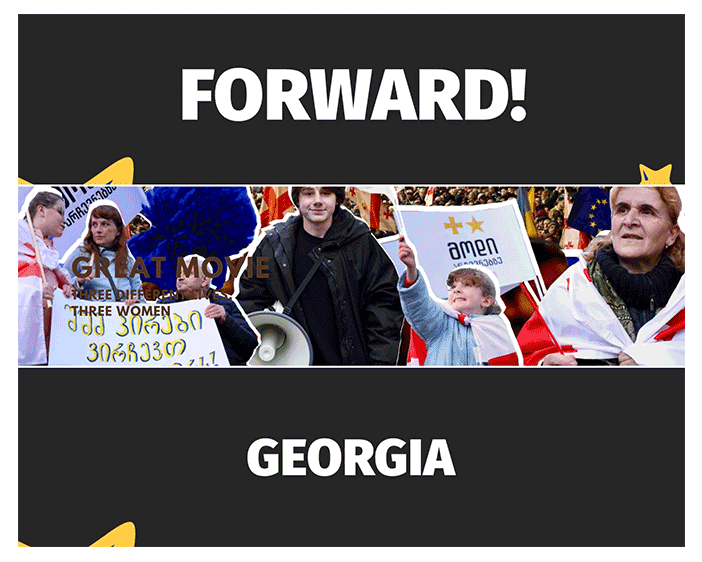
The program established two clear objectives:
-
Public awareness: Explain the importance of democratic participation.
-
Operational resilience: Equip CSOs with the tools to work effectively under the new legal conditions.
Importantly, the program did not remain “behind closed doors” but became widely accessible. Content developed in clear, inclusive language reached both major players in the capital and small initiatives in remote regions through social media and traditional media channels. Providing legal and financial consultations became the “oxygen” necessary for organizational survival.
The second major challenge for the organization is polarized propaganda. False claims circulate that civil society is controlled from abroad and disconnected from Georgia.
According to Irakli, this is the most oppressive propaganda, creating immense pressure.
"They spread that civil societies are not from Georgia, but controlled externally. This is compounded by laws adopted by our Parliament aimed at pressuring civil society and media. There is a noticeable intent to weaken us—perhaps they think it is oversight," he says.
The work was not easy. Throughout implementation, the team faced a politically sensitive environment and constantly changing legislation. Waves of disinformation and societal polarization sometimes created insurmountable barriers, yet RICDOG adapted quickly and managed risks effectively.
Despite the pressure, RICDOG continues its work across the Imereti region. Non-formal education, climate change, youth policy, and the consolidation of democracy remain the organization’s priority areas.
A notable moment from the program was an incident during the “Forward, Georgia, Forward” campaign. Citizens who had been indifferent or skeptical of CSOs for years began contacting the team personally.
"People asked how they could help or become part of this. That was the best proof for us that even in the bleakest political climate, sincere and accurate communication can break the ice and create the foundation for dialogue," Irakli recalls.
"I always remember how many young people were able to create a strong team-family around them. We aim to empower civil society as strongly as before, and why not even more. We act according to our principles and values," adds Irakli Tevzadze.
This material was issued thanks to the support of Czech non-governmental organization NESEHNUTÍ funded by the programme TRANSITION of the Ministry of Foreign Affairs of the Czech Republic.”
